








Reports
Identify, prioritize, and mitigate application risk across your entire SDLC with AI-powered precision.
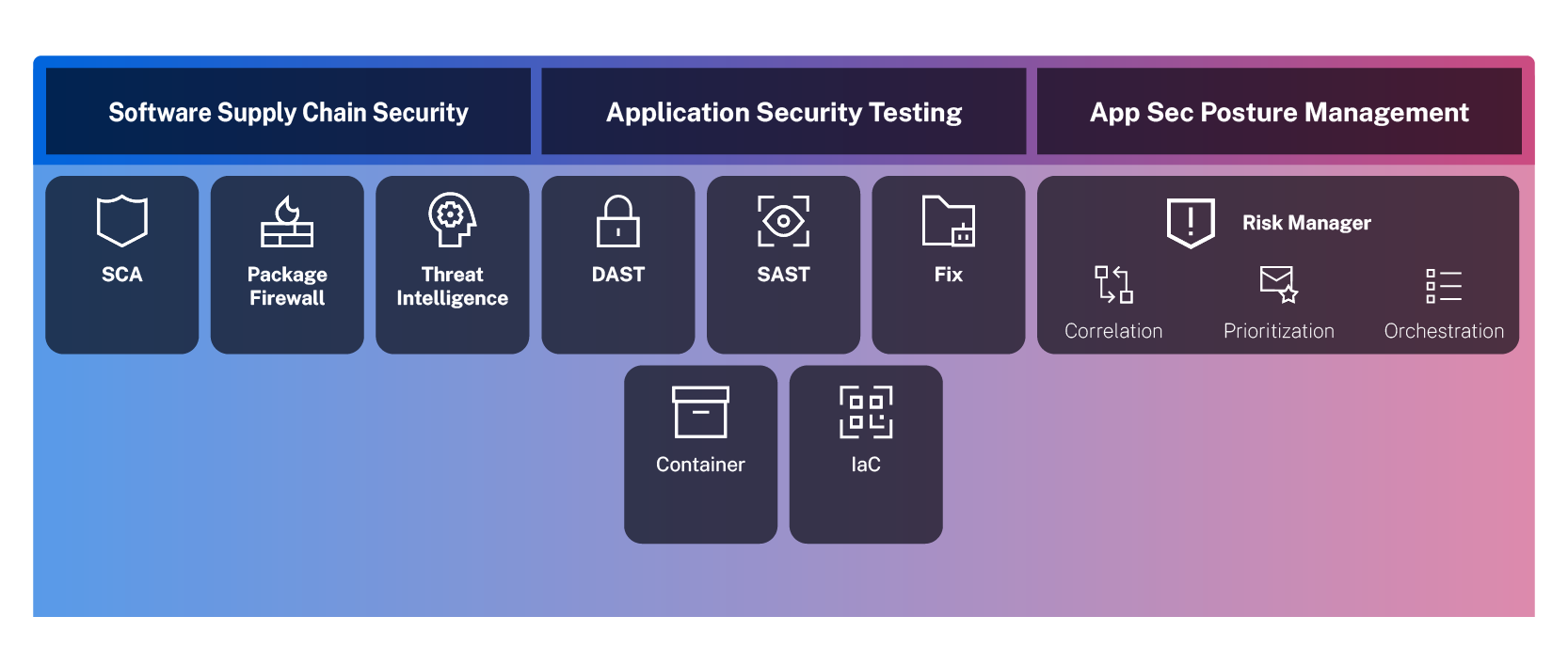
Veracode empowers secure development by identifying and resolving application risks with decades of expertise and AI-driven insights.
A suite of application risk management tools purposely built to reduce risk, catch vulnerabilities early, and empower developers to deliver secure code across the SDLC.
Essential AppSec Features
Empower your SDLC with cutting-edge tools that detect vulnerabilities, streamline remediation, and integrate seamlessly—delivering robust protection and actionable insights across every stage
Drive innovation with SAST, DAST, SCA, IaC, and container scans, seamlessly integrated into IDEs for instant, actionable insights
Boost productivity through AI-powered remediation, fixing flaws in minutes vs. hours.
Integrate testing into the tools developers use and give critical insights to security teams.
Increase visibility with real-time, actionable insights to prioritize and remediate flaws across complex environments.
Reduce risk with automated root-cause analysis to remediate the most urgent security issues first.
Empower secure coding practices across the SDLC by leveraging expert guidance to tackle challenges effectively.
Secure every step of your SDLC