

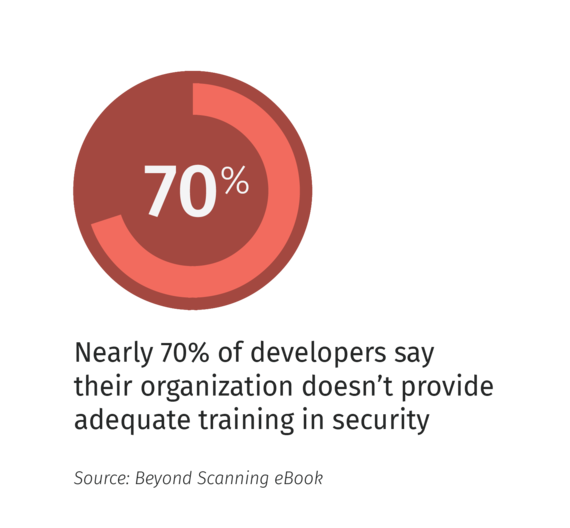
A Widening AppSec Training Gap
When it comes to software, developers are the only ones who can really fix the vulnerabilities in their code. But many lack the requisite skills to identify and remediate vulnerabilities. Existing training materials are often lengthy, irrelevant to the organization’s preferred coding languages, or just plain unengaging.
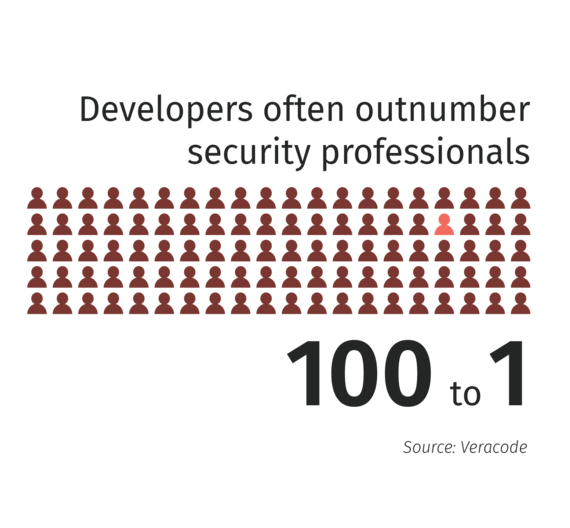
Meanwhile, one-third of organizations feel their AppSec programs are understaffed and underfunded. Hard-working security teams don’t have the bandwidth or expertise to teach developers secure coding practices.
So, if developers aren’t learning how to create secure code on the job or at school, where are they learning it? The answer: They aren’t.

Close the Gap With Veracode eLearning
Veracode eLearning builds your team’s confidence in AppSec by providing the knowledge and skills they need to ensure your company delivers secure software.
Through flexible online training options, developers learn how to write secure code from the start in way that complements their individual learning styles. Lessons include basics, like the OWASP Top 10, as well as more specific techniques for various programming languages and frameworks. When development is empowered to confidently fix security defects and reduce risk, security teams are better supported to scale AppSec programs, meet compliance requirements, and achieve business outcomes.

Increase AppSec Awareness
-
Foster a higher level of AppSec awareness and proficiency with comprehensive web-based training via our cloud-based portal.
-
Access a wide array of topics, including support for secure coding in common development languages and frameworks, such as Java, JavaScript, .NET, PHP, and Python.
-
Empower software developers, testers, and security leads with basic AppSec knowledge needed to reduce the risk of data breaches and meet compliance requirements.

Get Value at Every Level
Learn the basics for OWASP Top 10, or delve into specific techniques for various languages and frameworks.
Scale AppSec Programs
-
Build confidence to fix security defects and reduce risk quickly and autonomously.
-
Support security teams in scaling AppSec programs, meeting compliance requirements, and achieving business outcomes.
-
Embed into existing Learning Management Systems, as a result of SCORM-compliance.


